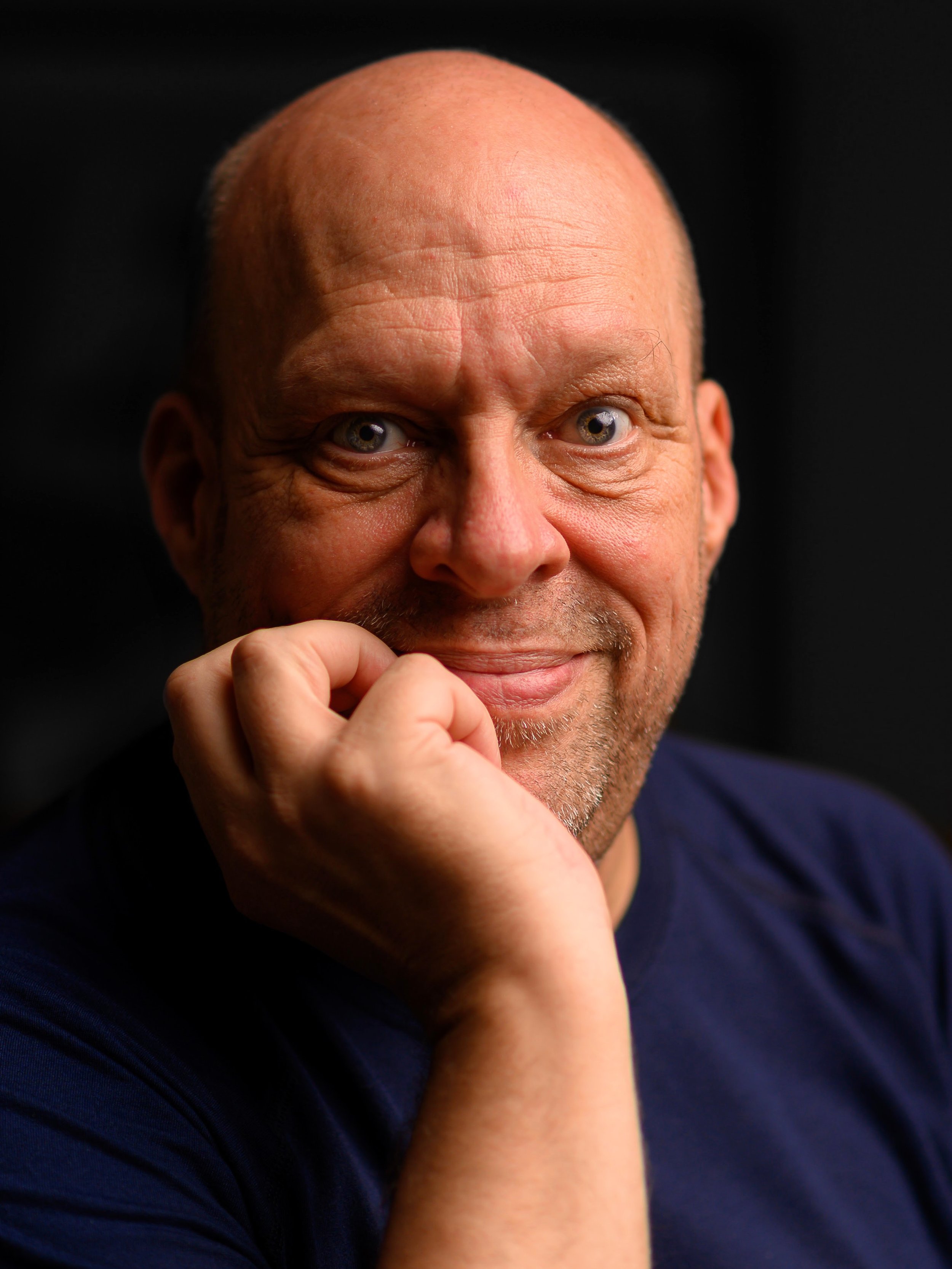
About Elliot Franco
I came to photography later in life.
As a kid, I enjoyed taking pictures, but I never thought of photography as anything more than a hobby. I wasn't studying cameras or worrying about technical details. I just liked taking pictures.
Then I discovered drones.
I loved flying, but what fascinated me most was the ability to see the world from a perspective that most people couldn't. I started looking for unusual angles and different ways of seeing familiar places — photographing the Statue of Liberty from above, finding new perspectives of New York landmarks, and capturing sunsets with the city stretching out in the distance.
I also crashed a lot of drones.
So much that the people I flew with eventually started calling me "Crash." I even had drone insurance for a while, until the insurance company apparently decided they'd had enough of me too. 😂
Eventually, after one particularly expensive crash, I decided it might be smarter to keep my feet on the ground.
That's when I bought my first Nikon.
And photography started taking on a life of its own.
Finding My Way Behind the Camera
I started with Nikon's DSLR system and eventually moved into the Nikon Z series mirrorless system.
I was photographing all kinds of things — landscapes, cityscapes, architecture and, increasingly, people. I was also spending more time in Medellín and becoming involved with photography communities in both Colombia and New York.
Those communities were a great mix of photographers and models. Models wanted photographs, photographers wanted people to photograph, and everyone had a reason to show up, shoot, learn and meet other people.
And that last part became increasingly important to me.
I love people. I love talking to people. I've always been outgoing, and photography gave me a reason to meet people I might never have met otherwise.
I began realizing that photographing buildings and landscapes was missing something for me.
Buildings don't talk back.
Photography had started as a solitary hobby. I could spend hours by myself photographing a city or a landscape and come home with photographs I loved, but I was still doing it alone.
I wanted something different.
I wanted to meet people. I wanted to interact with them. I wanted to share this journey with other people instead of experiencing it entirely by myself.
That was when photographing people began to take on a much bigger role in my photography.
Learning to See
As I was developing, I was fortunate to meet photographers who were willing to share what they knew and challenge me to improve.
Jared Polin became an important influence during that period. For roughly a year, we connected on a regular monthly basis, and his critiques went far beyond simply telling me whether a photograph worked.
He helped me understand how to shoot, what to look for and how to think about a photograph before pressing the shutter.
That kind of guidance was invaluable because I was still figuring out what kind of photographer I wanted to become.
Later, meeting and learning from Scott Church helped push me further toward photographing women. I became more interested in the things that make a portrait work — posing, lighting, expression, styling and the relationship between the photographer and the person in front of the camera.
Bobby Fingers, a New York photographer, also played an important role in my development, particularly when I was learning off-camera flash and beginning to understand how much lighting could change a photograph.
Each person influenced a different part of my journey.
But ultimately, I had to figure out what I wanted my photography to say.
Why I Moved to Sony
There was another problem developing at the same time.
My Nikon Z system was giving me beautiful colors — something I still appreciate about Nikon to this day. The colors straight out of the camera were gorgeous.
But as I became more focused on photographing people, I was increasingly frustrated by the autofocus.
I tend to shoot wide open — f/1.2, f/1.4, f/1.8 — where the depth of field can be incredibly shallow.
Too often, I would take what I thought was a great photograph and discover that the camera had focused on an eyelash instead of the eye.
That was maddening.
I didn't want to be thinking about whether the camera had found the right part of someone's face. I wanted to be thinking about the photograph — the expression, the pose, the lighting, the composition and the idea I was trying to create.
Eventually, I decided to make the jump.
I traded in my Nikon equipment and went completely into the Sony system.
Sony's Eye AF changed the way I worked. I could concentrate much more on creating the photograph rather than constantly worrying about whether the focus was going to land where I wanted it.
It wasn't simply a change in cameras.
It gave me the freedom to concentrate on being a photographer.
Discovering People
The more I photographed people, the more I realized that this was where I belonged.
I wasn't interested in simply taking someone's picture.
I wanted to create something.
I wanted to capture personality. Confidence. Attitude. Emotion. Sometimes beauty. Sometimes vulnerability. Sometimes all of those things at once.
One of the early shoots that really stayed with me was with an Italian model. We photographed around Brooklyn Bridge Park and later in Central Park, surrounded by the energy and colors of New York.
Everything seemed to come together — the locations, the light, the clothing, her ability to pose and my growing understanding of how I wanted to use the camera.
I remember looking at those photographs afterward and thinking:
"Wow. I can really do this."
That was an important moment.
Photography was no longer just a hobby I enjoyed.
It was becoming something I wanted to pursue seriously.
Photographing People
Today, the thing I care about most when photographing people is confidence.
I want someone to look at their photograph and think:
"Damn. I look good."
Whether I'm photographing fashion, editorial, portraits or boudoir, I want the person in front of my camera to feel good about themselves.
I don't want someone looking at a photograph and immediately seeing everything they think is wrong with themselves.
I want to find the photograph where everything comes together — the expression, the pose, the lighting, the styling and the personality — and show that person what I saw when I looked through my camera.
When someone looks at a photograph and suddenly sees themselves differently, that's a pretty great feeling.
And honestly, it works both ways.
When I look at something I've photographed and think, Damn, that's a great shot, I know I've done what I set out to do.
The White Shirt Series
That brings me to where my photography is heading now.
I've created a personal concept called The White Shirt Series.
The idea is simple: one white shirt, interpreted differently by every woman.
Different women. Different personalities. Different locations. Different lighting. Different styles.
The shirt stays simple.
The woman makes the photograph.
What began as an idea in my head has become a project I'm genuinely excited about developing. I want to photograph women in different places, work with different personalities and styles, and see just how many different stories can come from something as simple as a white shirt.
I'm particularly proud of this concept because it's something I created myself. I don't know exactly where it will ultimately take me, and that's part of what makes it exciting.
You can follow the project on Instagram at @in_my_white_shirt.
And that's really where I am with photography today.
I'm still experimenting.
I'm still learning.
I'm still looking for new people, new places, new ideas and new ways of seeing things.
The camera has changed a few times along the way.
The curiosity hasn't.
— Elliot Franco